With new marketing trends and “expert” advice popping up everywhere, many entrepreneurs feel more confused than helped.
They try every hack, every tactic, and some even hire so-called professionals—yet their marketing still yields little or no tangible ROI.
It’s no surprise that many begin to see marketing as an expense rather than an investment.
But here’s the truth:
Most marketing efforts fail not because of bad products or unattractive designs, but because entrepreneurs fail to understand what marketing truly is—and what it is not.
According to David Baer, “real marketing isn’t about being clever or cute, though. Nor is it about winning awards or impressing your peers with your creativity. It’s about creating a systematic approach to attracting, retaining, and growing your customer base.”
If your marketing effort isn’t achieving these things, frustration is inevitable.
Let’s look in detail at the 6 common marketing errors most small businesses make.
1. Focusing on Aesthetics Over Strategy
“Without strategy, content is just stuff, and the world has enough stuff.” — Arjun Basu
High-quality visuals are important, but they should never replace strategy. Why? That’s because without a clear plan, even the most beautiful designs and clever content become like stones thrown into an ocean—they just make a splash but create no real impact.
A strategic marketing plan gives direction and maximizes efforts. It’s the roadmap that connects your marketing goals with your brand’s objectives and values. It defines how you want to communicate, attract, and serve your customers.
How to fix this:
- Clearly define your goal.
- Create a marketing strategy document that serves as your guide, not just your checklist. It should clearly outline:
- Who your target audience is—and what they truly need.
- Your key message—what you want them to remember or feel.
- Where they are—the platforms or spaces they spend time in.
- Your success metrics—how you’ll measure what’s working and what’s not.
- Ensure that every piece you create has a clear intent that aligns with your plan.
Remember, pretty visuals catch attention, but only a strong strategy keeps it.
2. Not Understanding the Customer
To have effective marketing, you need to speak the language of your target audience. But then, how do you do that without an understanding of who your product is serving?
Many entrepreneurs focus on pushing products instead of studying people. That’s why they continually have great offers that don’t convert because they don’t connect.
Marketing will remain a trial-and-error effort if you don’t have a good understanding of your customer’s pain points, desires, journey, and decision triggers.
How to Fix This:
- Research deeply using surveys, conversations, and social media insights to understand what your audience truly wants and struggles with.
- Create a buyer profile that captures your ideal customer’s lifestyle, motivation, and challenges.
- Identify how they discover, consider, and decide to buy.
- Gather feedback and reviews; these are clues to what your audience values most.
3. Lack of Structure and System
“Great ideas fail not because they lack creativity, but because they lack structure.”
In life, doing things randomly doesn’t generate great results—so also in marketing. Lack of structure and systems leads to inconsistency, and this makes results unmeasurable.
Structure in marketing means having a defined process for planning, creating, distributing, and measuring your campaigns. A system ensures consistency, accountability, and clarity—even when things get busy or the team grows. If you want to get the best out of your marketing efforts, giving your plan the right structure and system is non-negotiable.
How to Fix This:
- Set clear marketing goals and timelines.
- Create repeatable systems for content creation, scheduling, and reporting.
- Use automation tools to streamline repetitive tasks.
- Assign roles and responsibilities—make sure everyone knows what they’re accountable for.
4. No Unique Selling Point (USP)
“If you don’t have a competitive advantage, don’t compete.” — Jack Welch.
Before putting your product out there, ask yourself: what makes you different from your competitors? This is more than a profit question—it’s about purpose and impact. Are you simply selling to make money, or are you improving your customers’ lives and experiences?
The market is already saturated. If you have nothing distinct to offer, you’ll easily get lost among the big players and louder brands. When your message sounds like everyone else’s, your audience can’t tell why they should choose you over another option.
Without a strong unique selling proposition, your marketing becomes forgettable and your brand directionless.
How to Fix This:
- Identify what your business does differently or better than others.
- Translate that into a single, memorable message that connects emotionally and practically.
- Ensure this USP is reflected across all platforms.
5. Ignoring the Power of SEO
As the saying goes, you can’t just ‘SEO’ your website and call it a day. It’s a process that needs to be integrated into every part of your marketing.
Many entrepreneurs, especially startups, focus on running ads and posting on social media but neglect optimizing their marketing campaigns for search engines. SEO ensures your brand shows up when and where your audience needs you most. Ignoring it means losing potential customers who are already looking for what you offer.
How to Fix This:
- Find out what your audience is searching for using tools like Google Keyword Planner.
- Make sure your website loads fast, looks good on phones, and is easy to navigate.
- Create helpful, valuable content that answers real questions your audience has.
- Get other trusted websites to link to yours—it helps Google trust you more.
- Track what’s working using tools like Google Analytics and adjust as you grow.
6. No Clear Message
“If you confuse, you lose.” — Donald Miller
You may have a solid plan to attract and retain customers.
You may even understand your product’s fit in the market and who your ideal audience is.
But if your message isn’t clear, everything else falls apart.
It’s not enough to know what to say—there’s an art to how you say it.
Your message is what connects your brand to your audience’s heart. When it’s unclear, people scroll past, even if your product is great.
How to Fix This:
- Know exactly who you’re speaking to—their pains, desires, and motivations.
- Keep your message simple and avoid complex words or jargon.
- Make it catchy and compelling—clarity first, creativity second.
- Don’t try to say too much in one post or campaign.
- Communicate value, not just features—show how your offer improves lives.
- Test your message. If a 10-year-old can understand it, you’re on the right track.
- Always add a clear CTA (Call to Action) to guide people on the next step.
Conclusion
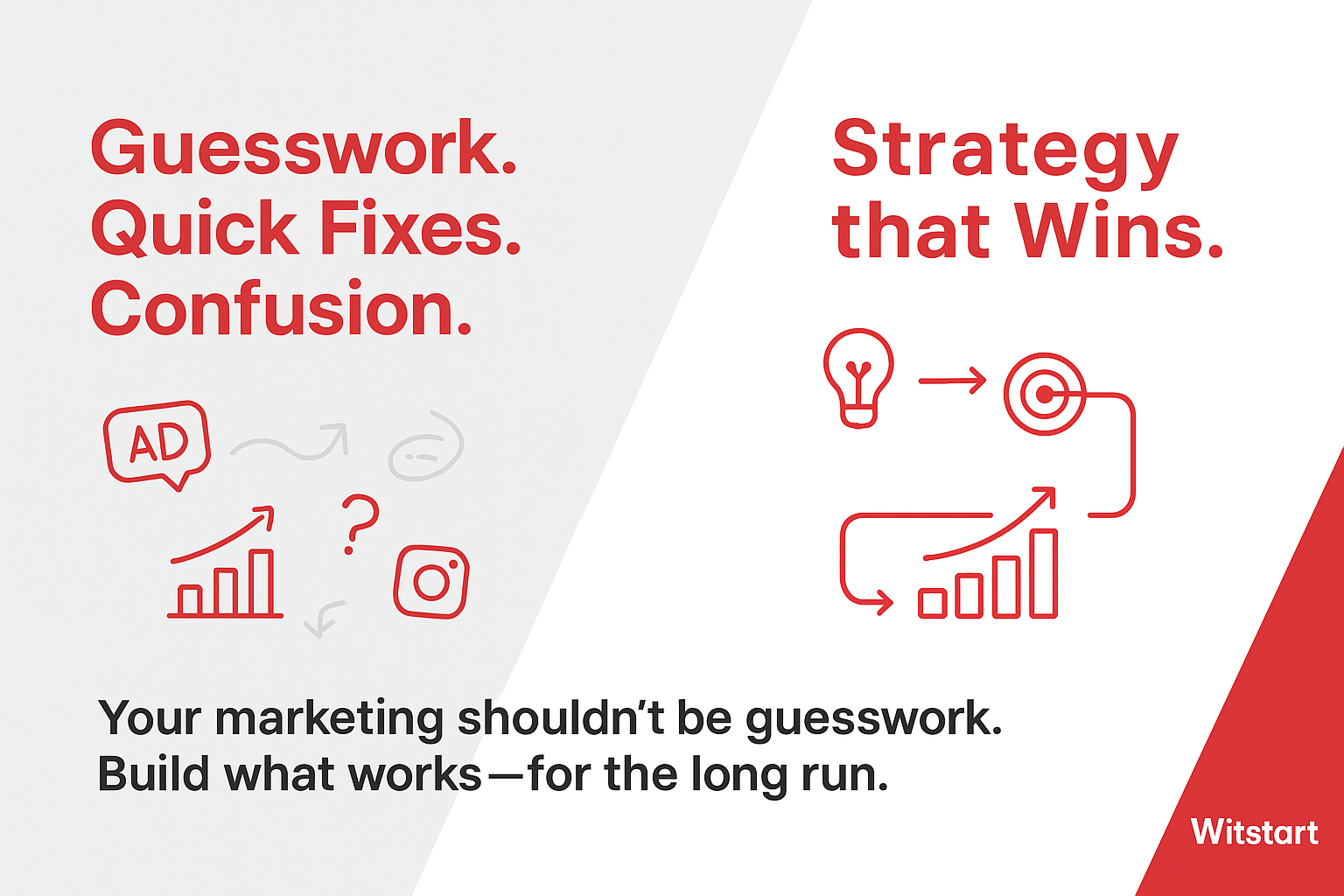
Don’t fall into the trap of treating your marketing like guesswork or a set of quick fixes.
Your marketing plan should be a strategic framework—one that helps you attract, engage, and retain customers for the long term.
At Witstart Agency, we help small businesses build strong brands that win hearts and drive results through clear strategies and marketing systems that actually work.
Let’s help you win—not just get by.

Binance账户
Your article helped me a lot, is there any more related content? Thanks!